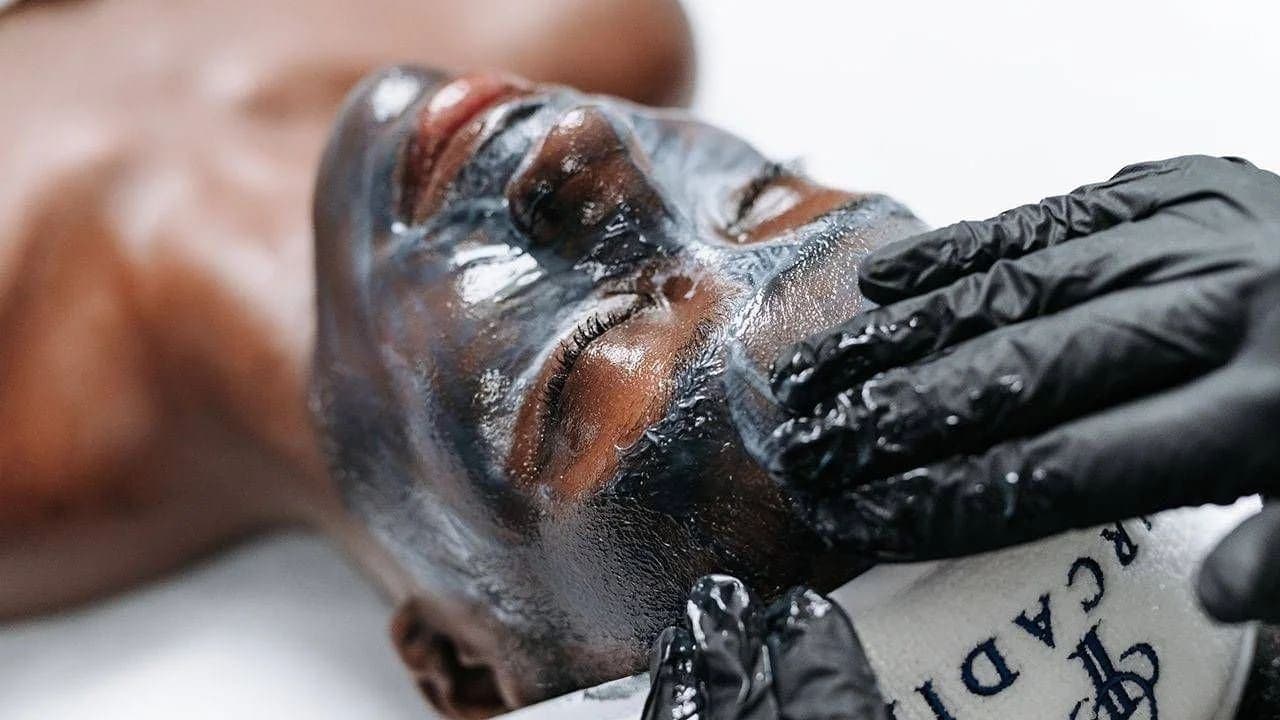
Nobody asks this question idly. It usually arrives with a price list open in one tab and a photo of somebody's flaking face in another, and underneath it is a fair worry: am I about to pay more for a treatment that is really the same thing with a scarier name?
No. A facial and a chemical peel are built to do different jobs. A facial cleans, treats, and supports the skin you have. A peel deliberately removes a layer of it so the skin that replaces it is more even. One is maintenance, the other is correction, and the confusing part is that on our own menu two of our three peels are wrapped inside a facial.
The one-line version
Book a facial when your skin is broadly healthy and you want it maintained, calmed, hydrated, or glowing for an event - from $160 on our Plano menu. Book a chemical peel when you want something measurably changed - surface pigment, rough texture, congestion that keeps returning - and you are willing to trade a few days of dryness or light flaking for it. All three of our Circadia peels are $225.
The Short Answer
If you cannot name a specific thing you want changed, book a corrective facial. That is not a lesser choice. Most skin most of the time needs consistent professional cleansing, barrier support, and an expert pair of eyes on it every month or so - and that is exactly what a facial is for.
If you can name it - dark marks left behind by last summer, a texture you can feel with your fingertips, blackheads that fill back in two weeks after every extraction - a chemical peel is the treatment that actually moves it, because it works by exfoliating further than a facial does.
The nuance that catches people out is on our menu rather than in the theory. Our Lactic Acid Peel Facial and Alpha-Beta Peel Facial are 60-minute treatments with a professional peel at the center and the facial steps built around it. Our Mandeliclear Chemical Peel is the opposite: 30 minutes, corrective, no facial attached. Same $225 either way - which tells you what you are really paying for.
What a Facial Actually Does
A corrective facial here runs 60 to 75 minutes and starts with a skin analysis, because the protocol is assembled after we look at your skin rather than before. Enzyme exfoliation, a mask chosen for your concern, Oxygen Rx or a Vitamin C infusion, extractions where they are warranted, and the manual work - massage, lymphatic movement, the decision to spend ten more minutes on your jawline and none on your cheeks.
The exfoliation step is the one that matters for this comparison. A facial uses enzymes, which digest dead surface cells gradually, and they are forgiving: if your skin is having a bad week, we can dial the step down or skip it entirely and still deliver a worthwhile treatment. The American Academy of Dermatology draws the broader line cleanly - "Chemical exfoliation uses chemicals, such as alpha and beta hydroxy acids, to dissolve dead skin cells," while mechanical exfoliation "uses a tool, such as a brush, pad, or sponge, or a scrub to physically remove dead skin cells." A professional peel is the first of those two, at a strength you cannot buy for home use.
It is worth being plain about the ceiling. The AAD's framing of the products involved applies to every facial anywhere: masks "can help moisturize and strengthen your skin barrier" but they "can't replace treatment for diseases and conditions such as eczema or acne," and "a facial mask is not a replacement for your skin care routine." A facial is professional-grade maintenance performed well. It is not medicine, and we will say so when medicine is what you need.
On our Plano menu the facial route runs $160 to $200 for a clinical corrective facial, $195 to $225 for a KNESKO gemstone facial, and $190 to $320 for the device route, the HydraFacial. If the HydraFacial is the comparison you actually came for, we wrote that one separately: HydraFacial vs regular facial.
What a Chemical Peel Actually Does
A peel is controlled chemical exfoliation at professional strength. The acid is applied, monitored for a set time, neutralized as needed, and the damaged surface layer lifts away over the following days. The AAD is direct about the clinical uses: "Dermatologists use chemical peels to treat some types of acne and conditions that discolor the skin," naming age spots, freckles, melasma, and fine lines, with results described as "more even skin color," a "brighter complexion," and "smoother skin."
We use Circadia professional peels, and there are three. The Lactic Acid Peel Facial (60 minutes, $225) hydrates and brightens - our choice for dry, dull, or mature skin, with no downtime. The Alpha-Beta Peel Facial (60 minutes, $225) is the alpha and beta hydroxy combination the AAD describes, for clearing pores and balancing oily, congested skin, also with no downtime. The Mandeliclear Chemical Peel (30 minutes, $225) is the corrective one: mandelic acid with a Vitamin A accelerator to push cell turnover, aimed at acne and pigment, and the one where some dryness or light peeling is expected.
All three sit in the gentlest category of peel. The AAD calls that category a "refreshing or lunchtime peel" and gives it a healing time of "1 to 7 days." The deeper categories are a different procedure entirely - a medium peel runs "7 to 14 days" of healing with skin "red and swollen," and a deep peel runs "14 to 21 days" with the area bandaged, requires "recuperation at home for 2 to 3 weeks," and is limited for life: "A person can have only one deep peel." We do not perform medium or deep peels. Those belong to a dermatologist or dermatologic surgeon, and if that is what your concern needs, that is where we will send you.
The same page is worth quoting on the thing people try instead: the AAD advises you "buy and use a chemical peel only under the supervision of a licensed, trained provider" and warns that "some chemical peels sold for at-home use are causing serious injuries." The $30 kit is not a cheaper version of the $225 appointment. It is an unsupervised one.
Chemical Peel vs Facial, Side by Side
Which We Book for Which Concern
These are our actual recommendations, matched to our actual menu. Your skin analysis can override any of them on the day.
Downtime, Honestly
This is where the fear lives, so here is the real version. Our Lactic Acid and Alpha-Beta peels have little to no downtime - most people look slightly flushed leaving the studio and normal by the next morning. The Mandeliclear is the corrective one, and some dryness or light peeling for a few days is part of how it works, not a sign something went wrong.
The AAD's published range for this category of peel is a healing time of "1 to 7 days" with the note that "skin will be red." Our three sit at the gentle end of that range, which is precisely why two of them are sold as peel facials rather than as procedures. If you need the deeper result, you need a dermatologist, and you should plan around weeks rather than days.
Two rules afterward that we repeat every time. Do not help the peeling along - no picking, no scrubbing, no washcloth. The AAD's exfoliation guidance is blunt about compounding the damage: "Be careful not to over-exfoliate, as this could lead to skin that is red and irritated" and "never exfoliate if you have open cuts or wounds or if your skin is sunburned." And wear sunscreen: on chemical peels specifically the AAD says to "apply sunscreen every day" once skin has healed, and "do not use a tanning bed or other type of indoor tanning." Freshly resurfaced skin burns faster, and a burn will undo the pigment work you just paid for.
Peels Come in a Series. Facials Come on a Schedule
This is the budget difference people miss, and it is bigger than the $65 gap between a $160 facial and a $225 peel. A peel is not a one-off purchase. The AAD's guidance for this category is that "3 to 5 peels may be necessary to give you the desired results" and that "these peels may be repeated every 2 to 5 weeks."
At our flat $225, that is $675 to $1,125 for a correction course, spread across roughly two to five months. We would rather you see that number before the first appointment than after the second one. If it is not the right spend this season, a facial every 4 to 6 weeks is a legitimate plan on its own, and nothing about it rules out a peel series later.
Neither treatment buys you a permanent result, and anyone who tells you otherwise is selling. The AAD puts it plainly for peels: "most results are not permanent because our skin continues to age." The same is true of every facial ever performed. What changes how your skin looks a year from now is the rhythm, not the single appointment.
Most People End Up Doing Both
In practice our regulars are not peel people or facial people. They run a peel series when there is something to correct, then settle back into a facial every 4 to 6 weeks to hold the result. Correction, then maintenance, then correction again when a new Texas summer undoes some of it.
The one thing we do not do is stack them. Two exfoliating treatments close together is the most common way people arrive at tight, stinging, unexpectedly broken-out skin - the over-exfoliation the AAD describes, bought at professional prices. If you have had a peel in the last two weeks, tell us, and we will build a gentler facial around it.
Same goes for your bathroom shelf. Retinol, prescription retinoids, and acid toners all change how your skin responds to a peel. We ask at the analysis, and the honest answer matters more than the tidy one.
When a Peel Is the Wrong Call
We would rather talk you out of a peel than take $225 for the wrong treatment. These are the situations where we do.
- An event inside two weeks. Even our gentle peels can flake on the wrong day. Before an event we book a facial or a HydraFacial, and we plan peels months ahead.
- Skin that is already compromised. Sunburn, open or broken skin, a bad flare. The AAD's rule is not to exfoliate any of it, and we follow that rule.
- Rosacea-prone and reactive skin. The AAD avoid-list for rosacea names lactic acid and glycolic acid, which puts our Lactic Acid Peel and Alpha-Beta Peel off that route - our own menu, our own disclosure. The calming facial route is the better spend.
- Isotretinoin or a prescription retinoid. Tell us before you book. That is a conversation with your prescriber first, and it is not an esthetician's call to make.
- Deeper skin tones without a plan. Peels can work beautifully, but the AAD is explicit that people with skin of color should see a dermatologist experienced with peels on darker skin tones or they "can develop permanent pigment problems." We discuss that openly rather than quietly.
- Anything that needs a diagnosis. A spot that is new, changing, itching, or bleeding; acne that has not responded to over-the-counter care; a rash nobody has named. That is a doctor's job - esthetician vs dermatologist maps the line exactly.
Booking in Plano
Every appointment at our Plano studio opens with a professional skin analysis, and that is where this question gets answered for your face instead of in the abstract. Book either one. If the other turns out to be the right call that day, we will tell you and switch it - that is a normal Tuesday here, not an awkward conversation.
Care is provided by founder and licensed esthetician Leila Razipoor, who trained at Collin College and is HydraFacial and microneedling certified, with clinical protocols overseen by our Medical Director, Dr. Brady Steineck, MD - our methodology page explains how that works. Our clients have rated the studio 5.0 stars across 62 Google reviews. Browse the full treatment menu, compare the peels against the corrective facials, or get in touch and we will start with the analysis.
Frequently Asked Questions
Keep exploring