If acne has left its mark long after the breakouts have cleared, you are not alone, and you have options. Two of the most talked-about treatments for acne scars are microneedling and chemical peels. Both can help improve the look of scarring and uneven texture, but they work in very different ways, suit different types of scars, and involve different downtime. Choosing between them is not about which is universally better, it is about which is better for your skin and your scars.
At Skin Study Med Spa in Plano, we offer both, and we frequently use them together over time. In this guide we break down how each treatment works, who each is best for, what the research suggests, and exactly what they cost on our menu, so you can walk into your consultation knowing what you want to ask.
Medically reviewed
This article was reviewed for clinical accuracy under the medical direction of Dr. Brady Steineck, MD, our Medical Director, who oversees our clinical protocols. Treatments are performed by licensed esthetician and founder Leila Razipoor, who trained at Collin College and is microneedling certified. It is educational and not a substitute for an in-person evaluation.
Understanding Acne Scars: Not All Scars Are the Same
Before comparing treatments, it helps to understand what you are actually treating, because the word "scar" covers a few very different things. Getting this right is the single most important factor in choosing the right approach, and it is why a good consultation always starts by looking closely at your skin.
Broadly, acne leaves two categories of marks. The first is true textural scarring, where the skin's collagen was damaged and the surface is now indented or uneven. The second is discoloration, where the surface is smooth but the tone is off.
Atrophic (indented) scars
Atrophic scars are the depressed, textured scars most people picture. They form when acne inflammation damages collagen and the skin heals with a loss of tissue. Dermatologists generally group them into three common shapes:
- Icepick scars — narrow, deep pits that look like the skin was pricked with a fine tool.
- Boxcar scars — broader depressions with sharper, well-defined edges, often on the cheeks and temples.
- Rolling scars — wider, shallow dips that give the skin a gently undulating or wavy look.
Because atrophic scars are a structural problem, treatments that rebuild collagen in the deeper layers of the skin tend to help most with them.
Pigmentation and post-inflammatory hyperpigmentation (PIH)
Not every mark left by acne is a true scar. Post-inflammatory hyperpigmentation (PIH) is the flat brown, tan, or pink discoloration that lingers after a blemish heals, especially common in medium to deeper skin tones. The skin surface is smooth, but the color has not evened out yet. Because this is a surface pigment concern rather than a structural one, treatments that resurface and lighten the top layers can make a meaningful difference.
Most people actually have a mix of both, which is exactly why comparing microneedling and chemical peels is so useful, they lean toward solving different parts of the problem.
How Microneedling Works for Acne Scars
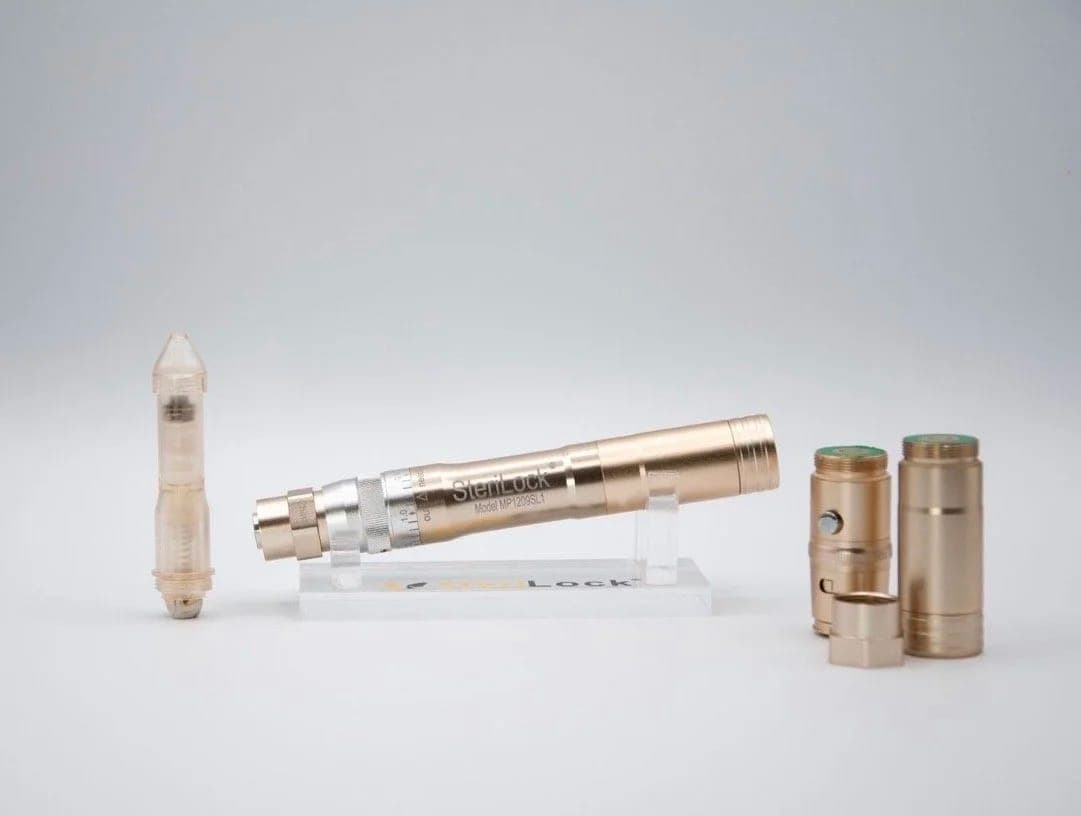
Microneedling uses a device with fine, medical-grade needles to create thousands of tiny, controlled micro-channels in the skin. These micro-injuries are small enough to heal quickly, but meaningful enough to switch on the body's natural wound-healing response, which stimulates the production of fresh collagen and elastin. Over a series of sessions, that new collagen can help fill and soften indented scars from underneath, gradually improving texture, firmness, and the appearance of atrophic acne scars.
At Skin Study Med Spa we use the SkinStylus microneedling system paired with AnteAGE regenerative topicals. Because microneedling temporarily opens the skin's surface, it also creates a window for those serums to absorb more effectively, which is why our higher tiers layer in growth factors, exosomes, and other regenerative ingredients. A numbing cream is applied first for comfort, and most people experience only mild downtime, typically some redness that looks a bit like a sunburn and settles over roughly 24 to 72 hours.
Here is our full microneedling menu, so you can see exactly what each option includes:
Because it works at the level of collagen, microneedling is especially well suited to true textural scarring, the icepick, boxcar, and rolling scars described above, as well as general roughness and fine lines. You can learn more on our microneedling and exosomes page.
How Chemical Peels Work for Acne Scars
A chemical peel takes a different route. Instead of creating micro-injuries with needles, a peel applies a professional-strength acid solution that loosens and exfoliates the outer layers of skin. As those tired, pigmented surface cells shed, fresher and more even skin is revealed underneath, and the controlled exfoliation encourages healthy cell turnover. This makes peels particularly effective at addressing surface pigment, dullness, and mild textural irregularity.
We use professional Circadia peels, and each of our three peels is $225. The right one depends on your skin type and your primary concern:
- Lactic Acid Peel ($225) — a gentle, hydrating and brightening peel ideal for dry, dull, or mature skin, with no downtime.
- Alpha-Beta Peel ($225) — a clarifying peel for oily, congested, or acne-prone skin, also with no downtime.
- Mandeliclear (Mandelic Acid) Peel ($225) — a corrective peel that targets acne and pigmentation and includes a Vitamin A accelerator. Expect some dryness and light peeling. Of our three peels, this is the best choice for acne scars and pigment concerns.
Peels shine when the main issue is tone rather than texture, think post-inflammatory hyperpigmentation, uneven color, and a rough or congested surface. They can also be part of keeping active breakouts in check, which helps prevent new scars from forming in the first place. Explore the full lineup on our chemical peels page.
Microneedling vs Chemical Peel: Side by Side
Here is a direct, at-a-glance comparison of the two treatments across the factors that matter most when you are deciding.
Neither column is the "winner" on its own. The right choice depends on what your scars actually are, which is where the next section comes in. You can always compare both against our other options on the full treatment menu.
Which Is Right for Your Skin?
Use these simple guidelines as a starting point, then confirm with a professional who can look at your skin in person.
Choose microneedling if...
- Your main concern is indented, textured scarring — icepick, boxcar, or rolling scars.
- You want to stimulate collagen and elastin to improve firmness and smoothness over time.
- You are interested in adding regenerative boosters like exosomes or growth factors for an extra edge.
- You are comfortable with a short window of mild redness in exchange for deeper, structural improvement.
Choose a chemical peel if...
- Your main concern is discoloration or pigment — post-inflammatory hyperpigmentation, uneven tone, or dullness.
- You want little to no downtime (Lactic and Alpha-Beta peels require none).
- Your skin is oily, congested, or acne-prone and you want to clarify and refine the surface.
- You are targeting both pigment and active acne, in which case our Mandeliclear peel is often the go-to.
Why not both?
In real life, many people get the best results by combining the two over time rather than choosing just one. Because most acne scarring is a mix of texture and pigment, a thoughtful plan might alternate microneedling to rebuild collagen with periodic peels to keep tone even and pores clear, spaced appropriately so the skin has time to recover between treatments. This is always sequenced with care, never stacked aggressively, and it may also include our clinical and corrective facials for ongoing maintenance. Your provider will design the timeline around your skin's tolerance and your goals.
The takeaway
Microneedling generally leans toward texture and indented scars, while peels lean toward pigment and surface tone. Many clients benefit from a personalized series that uses both. The best way to know is a consultation, so we can match the plan to your specific scars.
What the Research Says
It is fair to ask whether one treatment has an evidence edge for acne scars specifically. The honest answer is that both are well-established, and the best choice still depends on your scar type, but the research is encouraging for microneedling when it comes to indented, atrophic scarring.
One study published on a study published on PubMed Central compared microneedling with a glycolic acid chemical peel for atrophic acne scars and found that microneedling outperformed the peel, with the difference being particularly notable in darker skin types. Research like this suggests that for true textural scarring, and especially for patients with more melanin-rich skin who need a gentler approach to pigment risk, microneedling may offer an advantage. As with any single study, results vary from person to person, and it should be read as supportive evidence rather than a guarantee.
That said, chemical peels remain a valuable, well-supported tool, particularly for the pigment side of acne scarring where surface exfoliation is exactly what is needed. For balanced, non-commercial guidance on scarring and skin health, the American Academy of Dermatology is an excellent resource. The most reliable path is always a professional evaluation that matches the treatment to your scars rather than to a headline.
Getting Started in Plano
Deciding between microneedling and a chemical peel really comes down to one conversation: what kind of scarring do you have, and what result matters most to you? At Skin Study Med Spa in Plano, we start every acne-scar journey by looking closely at your skin, identifying whether we are dealing with texture, pigment, or both, and then building a plan around it, whether that is microneedling, a chemical peel, or a thoughtful combination of the two over time.
Care is led by licensed esthetician and founder Leila Razipoor under the medical direction of Dr. Brady Steineck, MD, and our clients have rated the experience 5.0 stars across 62 Google reviews, which you are welcome to read on our reviews page. When you are ready to take the next step, get in touch to book a consultation and we will help you choose the right acne scars treatment for your skin, with no pressure and full transparency on pricing.
Frequently Asked Questions
Keep exploring
Related services
Related reading
- Chemical Peel vs Facial: Which One Does Your Skin Need?
- Microneedling Aftercare: What to Do After Treatment
- Microneedling With Exosomes vs PRP
- How Much Does Microneedling Cost in Plano?
- How to Get Rid of Acne Scars
- Best Facial for Acne, Rosacea & Hyperpigmentation
- How Much Does a HydraFacial Cost in Plano?
- Best Chemical Peel for Hyperpigmentation