The breakouts cleared months ago and something is still there. You have been searching for how to get rid of acne scars, you have seen serums that promise to erase them and treatments that promise to resurface them, and none of it tells you which one your own face needs.
That is because almost every guide skips the step that decides everything. Before any treatment question can be answered, you need to know whether you are looking at a scar at all - and a surprising share of what people bring us under that name is not one. Get that right and the rest of the plan more or less writes itself.
The one-line version
If the surface of your skin is smooth and only the color is off, it is a mark, not a scar, and it will likely fade - with the right routine and sunscreen, faster. If you can feel a dent or see a shadow in raking light, collagen was lost, no cream will fill it, and improving it takes a procedure.
The Honest Answer First
True acne scars are not erased. They are made less noticeable. The American Academy of Dermatology puts it plainly in its overview of acne scars: "While acne scars can fade, they rarely go away completely on their own." What is achievable, in the same passage, is that "dermatologists help many people with acne scars to see smoother and more even-toned skin."
Smoother and more even-toned is a real result and it is worth having. It is also not the same promise as before-and-after photography implies. Anyone who tells you a single appointment will remove indented scarring is selling you something, and we would rather lose the booking than set that expectation.
Step One: Is It a Scar or a Spot?
This is the fork in the road. The AAD is specific that the flat marks left behind by acne are usually not scars: "When a pimple or other acne breakout clears, you may see a flat, pigmented spot where you had the acne. These flat spots are usually not scars. A common type of flat spot that's not a scar is called post-inflammatory hyperpigmentation (PIH)."
There is a two-second test you can run in your own bathroom. Stand side-on to a window or a lamp so the light rakes across your cheek rather than hitting it straight on. Flat discoloration disappears in that angle. A depression casts a shadow. Then run a fingertip over the area with your eyes closed - texture is easier to feel than to see.
Most people, on honest inspection, have a mix. That is normal, and it is the reason a plan usually has more than one component rather than one hero treatment.
The Shapes of a Real Scar
If you did feel texture, the shape matters, because depth is what determines how much a resurfacing treatment can reach. Depressed scars form, per the AAD, when "your skin makes too little collagen to fill the area where the acne was," and the Academy's guide to the signs and symptoms of acne scars names three:
- Ice pick scars - "This is the most common type of acne scar. It looks small but goes deep into the skin."
- Boxcar scars - "These scars cause a round or oval-shaped depression in the skin. They are wider than ice pick scars but not as wide as rolling scars."
- Rolling scars - "This type of scar is wide and shallow. When someone has many rolling scars, the skin can have a rolling or wavy appearance."
Rolling scars are the most rewarding to treat, because shallow and wide is exactly what collagen stimulation is good at. Ice pick scars are the least, because a narrow tract going deep cannot be filled from the surface - those are the ones dermatologists address with punch excision or a focused acid technique rather than a resurfacing pass. And the same page notes the other direction exists too: "If your skin makes too much collagen when healing after a breakout, you develop raised scars." Raised scarring is a physician's territory, not ours.
What Actually Fades a Dark Spot
If the test told you your marks are flat, this is the shorter and cheaper road, and most of it happens at home between appointments. The AAD's dermatologist guidance on how to fade dark spots recommends looking for one of a short list of active ingredients: "azelaic acid," "glycolic acid," "kojic acid," a "retinoid (retinol, tretinoin, adapalene gel, or tazarotene)," or "vitamin C."
One product from that list, used consistently, beats four used sporadically. Layering all of them at once is how people arrive here with a compromised barrier and more redness than they started with.
The non-negotiable part is sun protection, and the AAD is unusually prescriptive about the form it should take: "use tinted sunscreen with iron oxide," at "SPF 30 or higher," broad-spectrum, water-resistant, reapplied "every two hours, and after swimming or sweating." The iron oxide detail matters because visible light drives pigment too, and a clear sunscreen does not filter it. Skipping this step is the single most common reason a pigment routine appears to do nothing for a year.
One warning worth repeating
The AAD states it directly: "Never use liquid bleach. Liquid bleach is a harmful treatment for removing dark spots and patches." The Academy also notes that researchers have found undisclosed steroids or mercury in imported skin-lightening products. If a cream promises to erase pigment in days and you cannot verify what is in it, it is not worth your face.
Where At-Home Care Runs Out
Everything above works on color. None of it works on a dent, and it is worth being clear about why: a depressed scar is a structural deficit under the surface. Nothing applied to the top of the skin adds collagen back into the space where it was lost. A retinoid will refine the surface around the scar and can make the edges read a little softer. It will not raise the floor.
That is the honest ceiling on at-home care, and hitting it is not a failure of discipline. It is the point at which the question changes from what to apply to what procedure to book.
The Full Professional Option Set
Here is the whole landscape, including the parts we do not offer - because knowing what exists is how you avoid paying for the wrong thing. The AAD's page on acne scar consultation and treatment lists chemical peels, fillers, laser resurfacing, acne scar surgery, and dermabrasion among the options a dermatologist may use, and for raised scars "laser treatments, injections of corticosteroids or another medication, or applying a prescription medication."
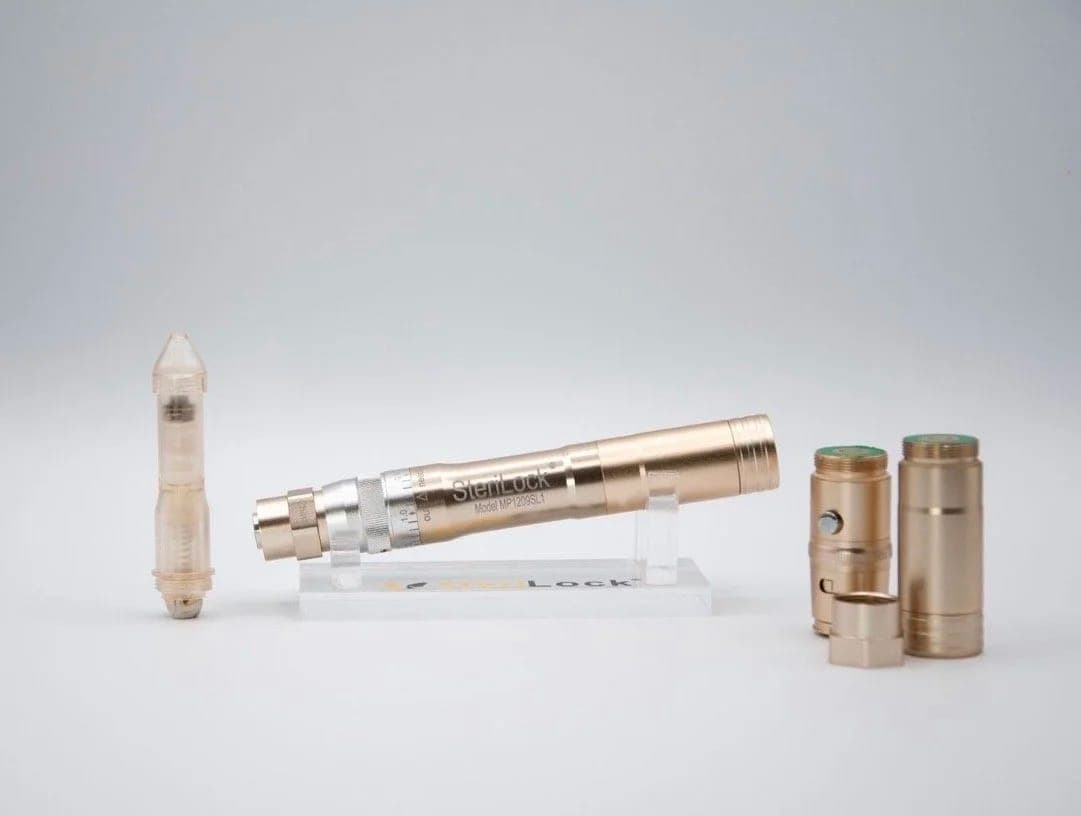
Of those, two are on our menu. Microneedling with SkinStylus creates controlled micro-channels that prompt the skin to lay down new collagen, which is the mechanism that addresses a depression rather than the color over it - and it is the one the AAD notes "is often used along with another treatment like radiofrequency, chemical peeling, or platelet-rich plasma." Our chemical peels work the pigment and surface side. If you want the detailed head-to-head on which of the two fits your skin, that is a longer conversation than this page can hold, and we wrote it out in full: microneedling vs chemical peel for acne scars.
One more thing the AAD is firm about, and so are we: "if you have acne breakouts, your plan will likely begin with acne treatment. Stopping acne breakouts can reduce inflammation and prevent new acne scars." Resurfacing skin that is still actively breaking out is treating the past while the future accumulates. Our Acne Treatment Facial at $200 is usually where that sequence starts, and if the acne is inflammatory or cystic, the right first appointment is with a physician - which is the distinction we lay out in esthetician vs dermatologist.
The Cheapest Scar Treatment Is Prevention
Nobody wants to hear this while looking at scarring that already exists, but it protects the skin you still have. The AAD's two instructions are short. The first: "preventing acne can prevent acne scars," by "treating acne when you first notice it" and continuing that treatment. The second is blunter: "never pick, pop, scratch, or squeeze breakouts. When you do any of these, you increase inflammation in your skin."
Inflammation is the variable that decides whether a breakout leaves nothing, a spot, or a dent. The AAD also flags who is most exposed - people who "develop deep, painful acne" or who have "a close blood relative with acne scars." If that is you, the case for professional extractions instead of a mirror and your own fingernails is a good deal stronger. That is routine work in a HydraFacial, from $190.
How Long Any of This Takes
Pigment first, because the number is knowable. Per the AAD, "a spot that is a few shades darker than your natural skin color will usually fade within 6 to 12 months," and "if the color lies deep in your skin, however, fading can take years." Treatment can shorten that. It cannot make it a fortnight.
Texture runs on collagen's schedule, not yours. New collagen builds over weeks and continues remodeling for months after a session, which is why microneedling is done as a series spaced several weeks apart rather than as a single appointment - and why the honest checkpoint for judging results is three to six months in, not the week after. The AAD's own framing is that "to give you the best results, your dermatologist may use more than one treatment." The same is true here.
The one thing that undoes all of it faster than anything builds: unprotected sun. Fresh scarring and recent pigment are both more photosensitive than the skin around them, and a treated area left uncovered can end up darker than before you started.
Where to Start in Plano
Every appointment at our West Plano studio opens with a professional skin analysis, and for acne scarring that analysis is most of the value. We will tell you which of your marks are pigment and which are texture, what we can realistically move, and what belongs with a dermatologist instead. Sometimes the recommendation is a series here. Sometimes it is a referral and a good sunscreen.
Care is provided by founder and licensed esthetician Leila Razipoor, with clinical protocols overseen by our Medical Director, Dr. Brady Steineck, MD - you can read how that works on our methodology page. Our clients have rated the studio 5.0 stars across 62 Google reviews, and plain talk about what a treatment will and will not do is a fair part of why. Browse the full treatment menu or get in touch and we will start with the analysis.
Frequently Asked Questions
Keep exploring