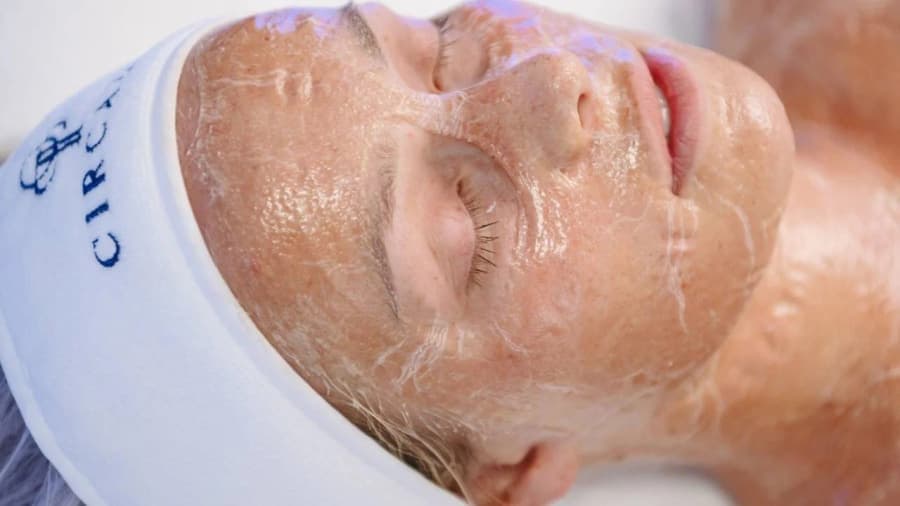
Almost every skincare menu in Plano says an appointment "begins with a consultation." Almost nobody says what that means. For some places it is a clipboard and two questions on the way to a treatment that was already decided when you booked it.
Here it is the part the rest of the appointment depends on. Every visit to our studio opens with a professional skin analysis, and the treatment is chosen after it rather than before - which means the analysis is where your money actually gets spent well or badly. This is what happens during it.
The one-line version
A skin analysis is a licensed esthetician looking closely at your skin today, asking what you use and what you take, and then choosing and explaining the treatment that fits what is in front of her. It is part of every appointment on our menu, not a separate line item, and there is no consultation fee. It is also not a medical skin exam - it does not diagnose anything, and it is not a mole check.
The Short Answer
Four things happen, in this order. We look at your skin in good light and touch it. We ask about your history, your products, and your medications. We decide what the skin in front of us needs that day. Then we tell you what we are going to do and why, before anything starts.
The outcome is usually the treatment you booked, sometimes with the actives, the exfoliation level, or the add-ons changed. Occasionally the outcome is a different treatment from our menu, and we will explain the swap rather than quietly substituting it. Now and then the honest outcome is "not today" - or a referral to a physician. All three are legitimate results, and our methodology page sets out the process this sits inside.
What We Are Actually Looking At
Skin is read, not scanned. The useful information comes from looking at it under proper light from several angles, touching it, and watching how it behaves through the cleanse. Here is the checklist running in the background:
- Barrier condition. Does the skin feel tight, look dull and crepey, flake at the edges, sting when something lands on it? A compromised barrier changes everything that follows, and it is the single most common reason we dial a treatment down.
- Oil, and where it actually sits. Not the label you were given in your twenties. Oil distribution moves with age, season, medication, and your current routine, and plenty of "oily" skin turns out to be dehydrated skin overproducing.
- Congestion, and which kind. Blackheads, closed comedones, milia, and active inflammatory breakouts are four different things that want four different responses. One of them should not be extracted at all.
- Pigment: pattern, borders, symmetry. Where discoloration sits and what shape it takes is most of the diagnosis of what caused it - and that determines whether a peel is even the right instrument.
- Texture and scarring. We rake light across the surface and we feel it. Flat discoloration disappears at an angle; a true depression casts a shadow and can be felt with a fingertip.
- Redness, and what kind. Diffuse flushing, defined visible vessels, and flat pink marks left behind by old breakouts look similar at a glance and are not the same problem.
- Firmness and lines. Which lines soften when the skin is hydrated and which ones do not. That one distinction decides whether the answer is a facial or collagen work.
- Reactivity. How your skin responds to being touched and cleansed in the first few minutes tells us how much it will tolerate for the next sixty.
The Questions We Ask, and Why
The questions are not small talk and they are not a sales script. Each one changes what is safe or sensible to do, and the honest answer is more useful than the tidy one.
- Medications and prescriptions - particularly isotretinoin and prescription retinoids, which change how skin responds to exfoliation and are a conversation with your prescriber before they are a conversation with us.
- Recent treatments anywhere else - waxing, lasers, injectables, a peel last month. Stacking resurfacing treatments too closely is the most common way people arrive with irritated skin they paid for.
- Cold sore history. Relevant to anything that resurfaces, and much easier to plan around in advance than to deal with afterward.
- Pregnancy or nursing - which rules some actives out entirely.
- Allergies and sensitivities, fragrance included.
- What you actually use at home - not what you bought, what you apply. We would rather see photographs of the real bottles than hear a brand name.
- Sun exposure, tanning, and self-tanner. A fresh tan or a burn changes the plan and sometimes postpones it.
- What changed recently. New product, new prescription, new stress, new season. Skin that "suddenly" misbehaves usually has a cause from the last six weeks.
The home-routine question matters more than people expect. The American Academy of Dermatology's guidance on choosing products is blunt about the two mistakes we see most: "no one product works for everyone", and "using more than one anti-aging product in a few days or weeks can irritate the skin, making you look older." A shelf of six actives bought in one month is a finding, not a detail - and it is often the whole explanation for what we are looking at.
The Judgment Calls an Analysis Settles
Most of the value is in telling apart things that look alike. These are the distinctions we are making while we look, and where each one leads on our menu.
What a Skin Analysis Is Not
This matters enough to state plainly, because "skin analysis" and "skin exam" get searched as if they were the same appointment. They are not.
A skin analysis is a cosmetic assessment performed by a licensed esthetician. The Texas Department of Licensing and Regulation defines that license around "cleansing treatments," "beautifying treatments," "facial treatments," massage, body hair removal, and eyelash extensions - and states that "an esthetician cannot perform any other barbering or cosmetology services other than those listed above." Diagnosis is not on that list, because diagnosis is a medical act. We can tell you what we see and what we think it is consistent with. We cannot tell you what you have.
It is also not a skin cancer screening. If what you want is somebody to look at a mole, you want a board-certified dermatologist, and you should book that rather than a facial. The AAD's ABCDE warning signs are worth knowing in the meantime - asymmetry ("one half of the spot is unlike the other half"), border ("an irregular, scalloped, or poorly defined border"), color ("varying colors from one area to the next"), diameter (melanomas are "usually greater than 6 millimeters, or about the size of a pencil eraser"), and evolving ("the spot looks different from the rest or is changing in size, shape, or color"). The AAD's instruction for any of those is to "consult your dermatologist immediately." So is ours.
What a med spa adds over a day spa is medical oversight, not medical authority: our clinical protocols are overseen by our Medical Director, Dr. Brady Steineck, MD. Where the line sits between the two kinds of appointment is the whole subject of our guide to esthetician vs dermatologist, and the usual order is doctor first for anything needing a diagnosis, esthetician after for the maintenance.
How to Get the Most Out of Yours
None of this is required. All of it makes the analysis sharper.
- Come without makeup if it is convenient. If it is not, say so - we cleanse first either way, and nobody is judging a full face of makeup at 5pm.
- Photograph your actual products. The labels tell us concentrations and actives that brand names do not. The bathroom shelf is more informative than the routine you describe.
- Write down your medications, including anything topical and anything prescribed by a dermatologist.
- Skip strong exfoliation the night before. Scrubs, acid toners, a retinol you only use occasionally - they make skin read as more reactive than it really is.
- Come without a fresh tan or burn. Freshly sun-exposed skin postpones most corrective work, including every peel on our menu.
- Tell us the date if there is an event. A wedding in three weeks changes the recommendation completely - that is the entire reason we wrote a pre-event timeline.
- Say the awkward things. That you pick. That something burned and you kept using it. That a treatment somewhere else went badly. Those are the most useful sentences in the appointment and we have heard all of them.
What You Leave With
The treatment itself, first - explained before it starts rather than narrated afterward. Beyond that, you should leave with four things.
- What we saw, in plain language. Not a grade out of ten and not a diagnosis. What your skin is doing and what we think is driving it.
- Aftercare for what was actually done. A hydrating facial and a corrective peel have very different instructions, and ours are specific to the treatment you had.
- A realistic timeline. What one appointment changes versus what a series changes, and how long before judging either. This is where we would rather lose a booking than oversell one.
- A direction for home care - usually fewer products rather than more, and one concern at a time. The AAD's framing is the one we use: "by focusing on one concern, such as wrinkles or dark spots, you'll get the best results."
What you will not leave with is a package you did not ask about. Every price on our menu is published, there is no consultation fee to find out what something costs, and if the honest answer is that your concern needs a physician rather than a facial, that is what you will hear.
Why We Do It Again Every Visit
Because the skin that walks in today is not the skin that walked in six weeks ago. Stress, sleep, medication, a new product, and the season all move it, and treating last visit's skin is the fastest way to over-exfoliate someone who had a hard month.
The seasonal part is real and it is the one most people underestimate. The AAD's own winter guidance is direct: "the weather changes year-round so it's important to make sure your skin care routine fits with the season," noting that "due to the drop in temperature and lack of humidity, our skin can have a difficult time retaining moisture" and that "dry, cold air can make fine lines and wrinkles more noticeable." The dermatologist quoted in that piece recommends patients "cut back on products that have alpha hydroxy acid or beta hydroxy acid" in winter, because "in the winter months, these products can be irritating for the skin even when combined with moisturizing creams."
Read that against our own menu and it has consequences. Our Alpha-Beta and Lactic Acid peels are exactly those acids, so a January analysis on tight, barrier-compromised skin may well end with us recommending hydration now and the peel series in spring. Chemical peel vs facial covers that trade in full. It is also why we do not sell a fixed twelve-month plan at your first appointment: the plan is supposed to move.
Booking in Plano
You can book any treatment on our menu directly - a HydraFacial, a corrective facial, a peel, microneedling - and the analysis happens at the start of it. If you genuinely do not know what to book, say that when you get in touch and we will start from the concern instead of the treatment.
Your analysis is performed by founder and licensed esthetician Leila Razipoor, who trained at Collin College and is HydraFacial and microneedling certified, with clinical protocols overseen by our Medical Director, Dr. Brady Steineck, MD. Our clients have rated the studio 5.0 stars across 62 Google reviews, and the unhurried look at your skin before anything begins is a fair part of why. Browse the full treatment menu or read how we approach every treatment.