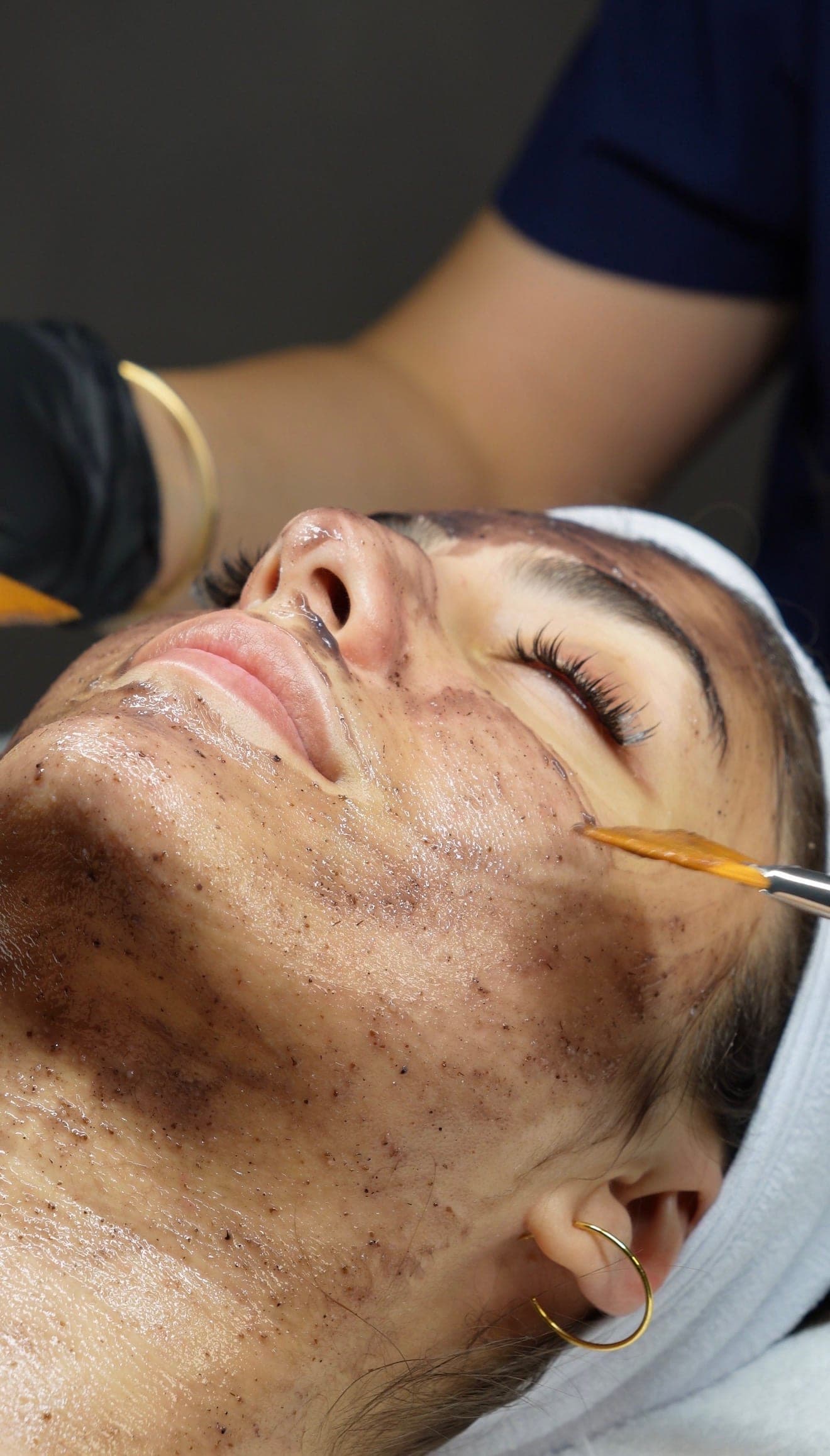
Every year the same thing happens around the end of September. The Texas heat finally breaks, people look in the mirror at what the summer did to their skin, and the peel questions start arriving. That timing is not a coincidence and it is not a marketing invention - fall genuinely is the sensible part of the year to run a chemical peel series, for one reason that has nothing to do with how the treatment feels.
The one-line version
A peel deliberately removes a layer of surface skin, and the skin underneath is more vulnerable to sun than the skin you walked in with. Running a series when sun exposure is naturally lower - shorter days, more time indoors, more clothing - makes protecting that new skin far easier. It does not mean you can skip sunscreen. It means the job gets easier.
The Short Answer
Two things make the cooler months the better window. The first is sun exposure: freshly resurfaced skin burns more easily, and a burn undoes the pigment work you just paid for. The second is scheduling. A peel course is not one appointment, and the calendar maths works out neatly if you start in autumn.
The American Academy of Dermatology's guidance for this category of peel is that "3 to 5 peels may be necessary to give you the desired results" and that "these peels may be repeated every 2 to 5 weeks." Start a course in October and you are finishing somewhere between December and the far side of winter - which puts the finished result in place well before the next North Texas summer starts testing it.
Why Sun Is the Whole Argument
The AAD does not hedge on this. On chemical peels it states that your "risk for developing an infection or scarring increase dramatically" if you "fail to protect your skin from the sun," tells you not to use a tanning bed or any other form of indoor tanning because "your skin will not heal properly," and instructs that once the skin has healed you "apply sunscreen every day" - explicitly "to help you maintain results."
Read those three instructions together and the seasonal logic writes itself. The weeks after each peel are the weeks when sun does the most damage, and the autumn and winter version of your life simply involves less of it: shorter daylight hours, a lower sun, more time indoors, sleeves and jackets. None of that is a treatment. It just removes a large part of the difficulty.
The stakes are highest if you are peeling for pigment. The AAD lists "temporary darkening of the skin" among the possible side effects of a chemical peel, and its melasma guidance is direct that "sunlight causes the skin to make more pigment, which can darken existing melasma and cause new patches." If you are running a peel series for pigment, sun discipline is not aftercare around the treatment - it is half the treatment.
Fall Is Not a Sunscreen Holiday
Here is where seasonal peel advice usually goes wrong, so we will be blunt: cooler weather is not lower risk because the sun has gone away. It has not. The AAD's instruction after a peel is to apply sunscreen every day, with no seasonal exception attached, and nothing about a mild Plano December changes that.
What autumn gives you is a smaller exposure budget to manage, not a free pass. The person who books a peel in October and then spends Saturday at a football game without sunscreen is in exactly the same position as the person who booked in July. Treat the season as a help, not as permission.
Building a Fall Peel Series
A series is the unit of purchase here, which makes the start date worth thinking about. On the AAD's published interval of every 2 to 5 weeks, a 3-to-5 peel course occupies roughly two to five months - so an October or November start finishes comfortably inside winter.
- Start with the analysis. Every appointment opens with a professional skin analysis, included rather than charged. That is where we decide which peel, how many, and how far apart - and whether a peel is the right call for your skin at all this season.
- Prep where it is indicated. The AAD notes that "before getting a chemical peel, some patients need to follow a pre-peel skin care plan for 2 to 4 weeks," which "can improve results and reduce potential side effects." If that applies to you, the prep window is part of the plan, which is another argument for starting in autumn rather than in spring.
- Space the sessions properly. Two to five weeks apart, set at your analysis rather than by the calendar you would prefer. Going sooner because there is a party coming is how people end up over-exfoliated.
- Hold the result with maintenance. Most clients step back to a facial every 4 to 6 weeks once a course is finished, and return to peels when there is something new to correct.
- Protect it through spring. The sunscreen habit you build in November is the thing that decides what your skin looks like next August.
At our flat $225 a peel, that course is $675 to $1,125 across the season. We would rather you saw that figure before the first appointment than after the second - the full menu is on our published price list.
Which Peel for a Fall Series
All three of our Circadia peels are the same price, so the choice is about your skin rather than your budget. What changes in autumn is which of them tends to suit the conditions.
If you are not sure which of the three belongs in your plan, the full comparison is in lactic vs alpha-beta vs Mandeliclear, and the honest answer may be that a facial is the better spend this season.
The Winter Caveat Nobody Mentions
Seasonal peel articles tend to stop at "less sun, book now." That skips something the AAD says about winter skin care, and we would rather you heard it from us. In its cold weather guidance the Academy notes that "due to the drop in temperature and lack of humidity, our skin can have a difficult time retaining moisture," and the dermatologist quoted there advises cutting back on products containing "alpha hydroxy acid or beta hydroxy acid," because "in the winter months, these products can be irritating for the skin even when combined with moisturizing creams."
That is advice about your bathroom shelf, not about a monitored professional treatment - but it is directly relevant, because the two add up. A peel in the studio plus an acid toner at home plus retinol three nights a week is a total exfoliation load, and winter is when skin has the least spare capacity for it. The AAD's exfoliation guidance is blunt about the result: "Be careful not to over-exfoliate, as this could lead to skin that is red and irritated."
So the practical version of fall peel season is: let the professional exfoliation be the exfoliation, and let home skincare do the supporting work - cleanse, moisturize, protect. Tell us everything you are using at the analysis, including the things you suspect we will not like. The honest answer changes the plan; the tidy one does not.
The same logic applies to stacking treatments. We will not put a peel and another exfoliating treatment close together, and if you have had a peel elsewhere in the last fortnight, say so and we will build a gentler appointment around it.
Protecting the Result
Daily sunscreen is the part of this plan that does the long-term work, and it is the cheapest thing in it. The AAD's sunscreen specification is worth following properly: choose one "that has an SPF of 30 or higher, is water resistant, and provides broad-spectrum (UVA and UVB rays) coverage." For a face the Academy's measure is "at least 1 teaspoon (about the amount needed to cover the length of your index and middle fingers)," applied before you go out because "it takes approximately 15 minutes for your skin to absorb the sunscreen," and reapplied "every two hours, and immediately after swimming or sweating."
A mineral formula with zinc oxide or titanium dioxide tends to be the comfortable choice in the days right after a peel. If you are treating pigment, the AAD's melasma guidance also names iron oxide among the filters worth looking for and suggests considering a tinted sunscreen - visible light drives pigment too, and a clear sunscreen does not filter it.
The rest of aftercare is short and non-negotiable: do not pick, do not scrub, do not help the peeling along, and keep the skin comfortable while it finishes. The full version, peel by peel, is in our chemical peel aftercare guide.
Booking a Fall Peel in Plano
Our peel menu is three Circadia peels at $225 each - the Lactic Acid Peel Facial, the Alpha-Beta Peel Facial and the Mandeliclear Chemical Peel - and the skin analysis that decides between them is part of the appointment. If this is your first peel, start with the comparison guide; if you are weighing a peel against a HydraFacial or microneedling for the season, this decision page covers all three.
Treatments are performed by founder and licensed esthetician Leila Razipoor, with clinical protocols overseen by our Medical Director, Dr. Brady Steineck, MD. Our clients have rated the studio 5.0 stars across 62 Google reviews. Get in touch and we will start with the analysis and build the season around your skin rather than around the calendar.
Frequently Asked Questions
Keep exploring