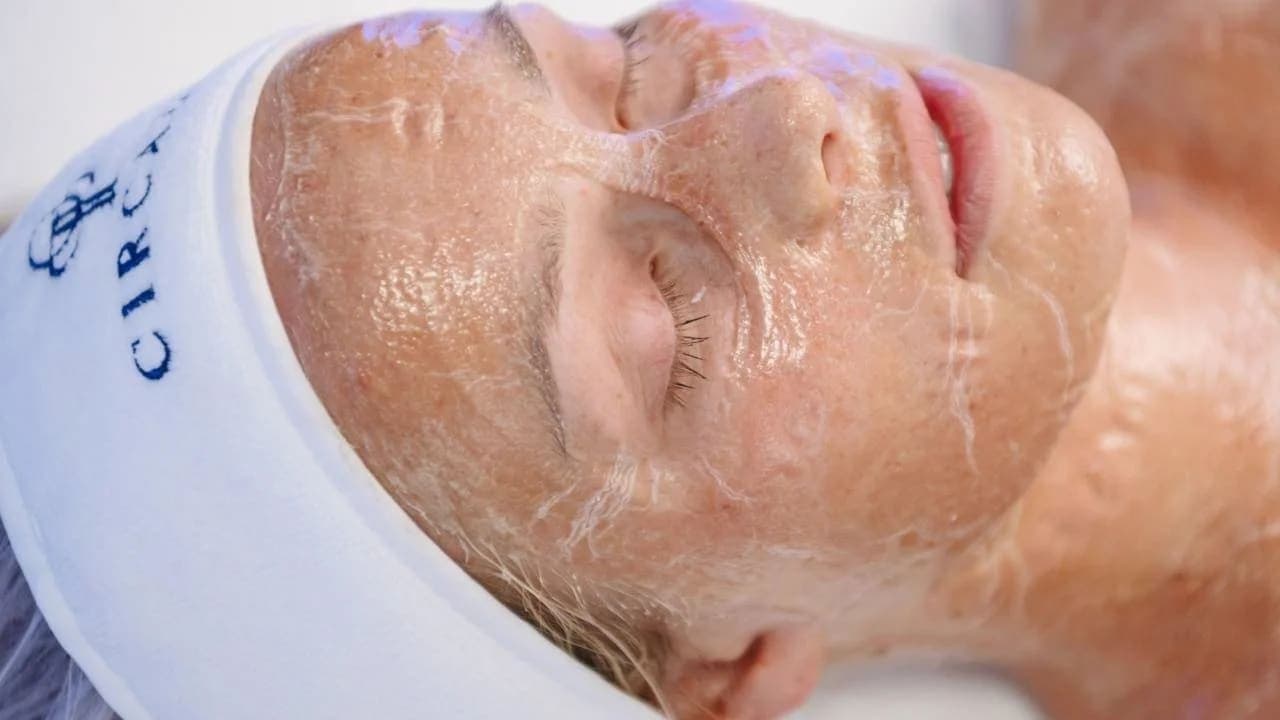
Most peel anxiety is really aftercare anxiety. People are not worried about the twenty minutes with acid on their face; they are worried about the three days afterward, and about whether they are going to have to explain themselves at work. So here is the honest version for the three Circadia peels on our Plano menu, including the one that is genuinely supposed to flake.
The one-line version
The Lactic Acid Peel Facial and Alpha-Beta Peel Facial have little to no downtime - usually a slight flush that has settled by the next morning. The Mandeliclear Chemical Peel is the corrective peel, and some dryness or light peeling for a few days is how it works rather than a problem. Across all three: do not pick it, do not scrub it, and wear sunscreen every day.
The Short Answer
All three of our peels sit in the gentlest category the American Academy of Dermatology describes, what it calls a "refreshing or lunchtime peel," with a healing time given as "1 to 7 days" and the note that "skin will be red." Our three sit at the gentle end of that range, which is precisely why two of them are sold as peel facials rather than as procedures.
For context on what we are not doing: the AAD gives a medium peel "7 to 14 days" of healing with skin "red and swollen," and a deep peel "14 to 21 days" with the area bandaged and "recuperation at home for 2 to 3 weeks." We do not perform medium or deep peels. If you have read a horror story about a peel, it almost certainly was not this category of treatment.
You will leave with written aftercare instructions for the peel you actually had, and they take precedence over anything on this page, because they are written for your skin on the day.
Downtime by Peel
That table is the reason we ask what your week looks like before we book. If you cannot have flaking skin on a particular day, say so - we will either choose a different peel from the three on the menu or move the appointment, and neither is an inconvenience to us.
What Is Normal, and for How Long
Across all three peels, the following are ordinary and not a sign that something has gone wrong.
- Redness or a flush. The AAD says plainly that after this category of peel "skin will be red." How red and how long varies by person and by peel; ours generally settle quickly.
- Tightness. Common for a day or so, especially on skin that was dry to begin with. Moisturizer is the answer, not an active.
- Dryness and light flaking. Expected after the Mandeliclear, occasional after the other two. It is surface skin leaving, which is the treatment working.
- Skin looking slightly worse before it looks better. Usually day two or three, usually brief. It is the least enjoyable part of a correction course and the most normal.
- A blemish or two surfacing. More common after a peel aimed at congestion. Resist the urge to attack it with everything in the cupboard.
What is not expected: blistering, open or weeping skin, spreading swelling, or significant pain. Those belong in the phone-call section further down, not in the wait-and-see category.
What to Avoid While It Finishes
- Do not pick, peel or scrub it along. This is the single most important rule and the one most often broken. Pulling off skin that is not ready is how light flaking turns into a mark that outlasts the result you came for.
- No exfoliation of any kind. No scrubs, no washcloths, no brushes, no at-home acids. The AAD's exfoliation guidance warns "be careful not to over-exfoliate, as this could lead to skin that is red and irritated" and says to "never exfoliate if you have open cuts or wounds or if your skin is sunburned."
- No tanning, indoor or otherwise. The AAD is explicit that after a peel you should not use a tanning bed or any other form of indoor tanning, because "your skin will not heal properly."
- No stacking another exfoliating treatment. A peel plus a resurfacing facial in the same fortnight is the fastest route to tight, stinging, broken-out skin - bought at professional prices. Tell any other provider you have had a peel.
- Nothing new and aggressive. This is not the week to start the retinol you bought last month or to try a friend's acid toner.
- Go easy on heat. Long hot showers, saunas and anything that leaves your face flushed are worth postponing while skin is settling.
What to do instead is unglamorous and short: a gentle cleanser, a moisturizer that your skin already gets on with, sunscreen every morning, and patience.
When Products and Makeup Come Back
There is no single number that fits all three peels, because they do not do the same thing to your skin. The honest rule we give at the appointment is to let comfort lead: once skin is no longer tight, pink or flaking, your normal routine can come back one product at a time.
- Makeup. After the Lactic Acid Peel Facial or the Alpha-Beta Peel Facial most people are comfortable wearing it the next day. After the Mandeliclear Chemical Peel it is better to wait until flaking has finished, because makeup over lifting skin looks worse than bare skin does - and because clean hands and clean brushes matter more than usual on freshly resurfaced skin.
- Retinol and prescription retinoids. These go back last, not first, and only once the skin is completely settled. If you are on a prescription retinoid, we will have agreed the plan with you before the peel rather than after.
- Acid toners, scrubs and exfoliating pads. Same answer - they are the thing most likely to tip settled skin back into irritation.
- Vitamin C and other actives. Reintroduce one at a time, with a few days between, so you can tell which one your skin objected to if it does.
- Moisturizer and sunscreen. Never paused. These are the two things that should be running the whole time.
If you are mid-series, bring the same honesty to the next appointment. What you used, when you restarted it and how the skin reacted all change what we do next - and they are more useful to us than a tidy answer.
Sun Protection Is Part of the Treatment
The AAD's position on this is the strongest language it uses anywhere on peels: your "risk for developing an infection or scarring increase dramatically" if you fail to protect your skin from the sun, and once your skin has healed you should "apply sunscreen every day" to maintain results.
The specification, from the AAD's sunscreen guidance: broad-spectrum, "an SPF of 30 or higher," water resistant, roughly "1 teaspoon" for the face, applied before you go out because "it takes approximately 15 minutes for your skin to absorb the sunscreen," and reapplied "every two hours, and immediately after swimming or sweating." A mineral formula with zinc oxide or titanium dioxide is usually the comfortable choice in the first week.
This is also why we like running peel courses through the cooler months - the protection job is simply easier. That argument is laid out in why fall and winter are peel season.
What Is Worth a Phone Call
Call the studio rather than waiting it out if you see any of the following. None of them is common after a superficial peel, and none of them is something to manage with a web search.
- Blistering, open, weeping or crusting skin
- Swelling that spreads, or redness that is getting worse rather than better after the first couple of days
- Significant pain rather than tightness or mild stinging
- Signs of infection - heat, pus, or a fever
- A cold sore starting, if you are prone to them. Tell us at the analysis next time too, because it changes the plan
- Darkening of the treated skin. The AAD lists "temporary darkening of the skin" among the possible side effects of a chemical peel, and we would always rather look at it early
Anything that needs a diagnosis rather than an opinion belongs with a doctor, and we will say so - our esthetician vs dermatologist guide maps where that line sits in Texas.
Spacing the Next One
Peels are bought as a course. The AAD's guidance for this category is that "3 to 5 peels may be necessary to give you the desired results" and that "these peels may be repeated every 2 to 5 weeks." Where you land inside that range depends on which peel you had and how your skin handled it, which is a conversation at the next appointment rather than a date you set now.
Two things make us slow down: skin that is still sensitive from the last one, and a home routine that is doing too much exfoliating of its own. Two things make us comfortable continuing: a settled barrier and consistent sunscreen. After a course, most clients step back to a facial every 4 to 6 weeks and return to peels when there is something new to correct.
Booking in Plano
Every peel appointment at our Plano studio opens with a professional skin analysis - included, not charged as a consultation - and that is where the aftercare plan is set alongside the peel itself. If you are still choosing between the three, the comparison guide covers all of them at $225 each; if your concern is acne specifically, chemical peels for acne is the more useful page.
Treatments are performed by founder and licensed esthetician Leila Razipoor, with clinical protocols overseen by our Medical Director, Dr. Brady Steineck, MD. Our clients have rated the studio 5.0 stars across 62 Google reviews. See the full peel menu, the price list, or get in touch with a question about recovery before you book - we would far rather answer it first.
Frequently Asked Questions
Keep exploring