If you have been searching for acne treatment in Plano, you have probably landed somewhere between two unhelpful extremes: a dermatologist's office with a wait and a prescription, and a spa menu promising "clear skin" without ever saying what it actually treats. This page is the middle of those two. It is the honest version of what a boutique med spa can do for acne, what it cannot, and - the part almost nobody writes down - what order to do it in.
Everything below is our real treatment menu at our real published prices, and the sequence we actually use at Skin Study Med Spa on West Park Boulevard. Where the honest answer is "this is medical, and you need a doctor," the page says so rather than selling you a facial.
The one-line version
We treat the pore, the oil and the aftermath. We do not treat the disease. Clogged pores, congestion, oiliness, the surface inflammation that comes with mild and moderate breakouts, and the brown marks and scarring left behind - those are all genuinely in our room, and the Acne Treatment Facial ($200, 75 min) is where most people start. Deep, painful, recurring nodules and cysts are a dermatologist's job first, and nothing on our menu is a substitute for acne medication.
The Short Answer
Acne is a medical condition, and the treatments with the strongest evidence behind it are medicines. That is not false modesty - it is the reason a med spa that is honest with you is more useful than one that is not. What professional treatment does well is the mechanical and inflammatory half of the problem: keeping follicles clear, bringing down surface irritation, managing oil, and then dealing with the pigment and texture a breakout leaves when it heals.
So the useful question is not "can a facial cure acne." It is "what part of this is mine to fix, and what part is a doctor's." For most people walking in with congestion, a persistent oily T-zone, occasional inflamed spots and a collection of brown marks, the answer is that nearly all of it is ours. For someone with deep cystic lesions along the jaw, almost none of it is, and the kindest thing we can do is say so at the consultation rather than four facials in.
The other thing worth knowing before you book anything, from us or from anyone: this takes longer than you want it to. The American Academy of Dermatology's own guidance on acne treatment is that "it takes at least 6 to 8 weeks before you start to see fewer breakouts" and that "to see clearing, you need to stick to your treatment plan." If a studio tells you one appointment will clear your skin, that is a sales line, not a timeline.
Three Questions That Decide Your Route
Before we pick a treatment, we are really answering three questions. You can answer them yourself in about a minute, and they matter more than any price comparison.
- What is actually on your face right now? Blackheads, closed comedones and a gritty texture are congestion. Red, sore, raised spots are inflammation. Deep lumps that hurt before you can see them are nodular or cystic. These three are not one problem and they do not take one answer.
- Are you already on something from a doctor? A prescription retinoid, a topical or oral antibiotic, spironolactone or isotretinoin all change what we can safely do and when. None of them rules out professional treatment, but they change the plan, and the prescriber's instruction outranks ours.
- Is it the acne that bothers you, or what it left behind? A surprising number of people booking "acne treatment" are actually looking at marks and scarring from acne that has largely settled. That is a completely different plan with a much better prognosis.
What Is Actually on the Menu for Acne
Six treatments on our menu are relevant to acne, and they are not interchangeable. This is the table we wish every med spa published, because the fourth column - what a treatment will not do - is the one that stops people spending money in the wrong room.
The two $200 facials, since people ask. The Acne Treatment Facial and the Oxygen RX Facial are the same price and the same 75 min, and both finish with Oxygen Rx, so the difference is genuinely not obvious from a menu. The Acne Treatment Facial leans harder on clearing: enzyme exfoliation plus a purifying mask aimed at congestion. The Oxygen RX Facial leans on calming: a cocoa enzyme and the oxygen step, which is why it is also our pick for rosacea and redness. Oily and congested, take the first. Red, reactive and inflamed, take the second.
The Order We Run It: Calm, Clear, Correct
This is the part that is missing from almost every acne page, including the good ones. Choosing the right treatment matters less than choosing it in the right order, and the most common expensive mistake we see is someone starting with correction - a strong peel, or microneedling - on skin that is still actively inflamed.
1. Calm, roughly weeks 0 to 6
If skin is red, reactive and breaking out, nothing aggressive is going to land well. Resurfacing an inflamed barrier usually buys you more inflammation, a longer recovery and - the genuinely costly outcome - more post-inflammatory pigment than you started with. So the first appointment is an Acne Treatment Facial, the home routine gets simplified rather than expanded, and if a doctor is involved we work around what they have prescribed. Nothing here is dramatic. It is supposed to be undramatic.
2. Clear, roughly weeks 6 to 12
Once skin tolerates handling without flaring, we start working on what keeps causing the breakouts: the congestion itself. That is where an Alpha-Beta Peel Facial series ($225 a session) or a monthly Deluxe HydraFacial ($270) earns its place. This stage is also where the AAD's six-to-eight-week window becomes real - it is the first point at which "is this working" is a fair question to ask, of us or of a prescription.
3. Correct, month three onward
Only when breakouts are genuinely infrequent do we go after what they left. Flat brown marks respond to pigment work - the Mandeliclear Chemical Peel is the one treatment that handles breakouts and marks at once, which is why it often becomes the bridge between stages two and three. Depressed scarring is structural and needs microneedling as a series. Doing either of these while acne is still active means treating a target that keeps moving, and paying for it twice.
Why we will sometimes talk you out of the more expensive treatment
The treatments people arrive asking for - microneedling, a strong peel - sit in stage three. If your skin is in stage one, selling you a stage-three treatment is the easiest upsell in the business - and the fastest way to make your skin worse. Every appointment here opens with a skin analysis, and the honest outcome of that analysis is quite often a cheaper treatment than the one you booked.
What the First Twelve Weeks Costs
Nobody publishes this, so here it is. A realistic first course for congested, moderately breakout-prone skin, at our published prices, assuming nothing goes sideways.
That is $850 to $875 across three months - a little under $300 a month. Notice how narrow that range is: our facials and peels sit within $25 of each other, so the route we choose barely moves the total. That is deliberate, and it is worth knowing before you book, because it means you should pick the plan that fits your skin rather than the one that looks cheaper. We would rather you saw the number before the first appointment than at the third. If it is more than you want to spend, the honest advice is to do fewer, properly spaced appointments and put the difference into a simple home routine - which, as the next section explains, is doing more of the work than we are.
The Step Doing the Work in Both Acne Facials
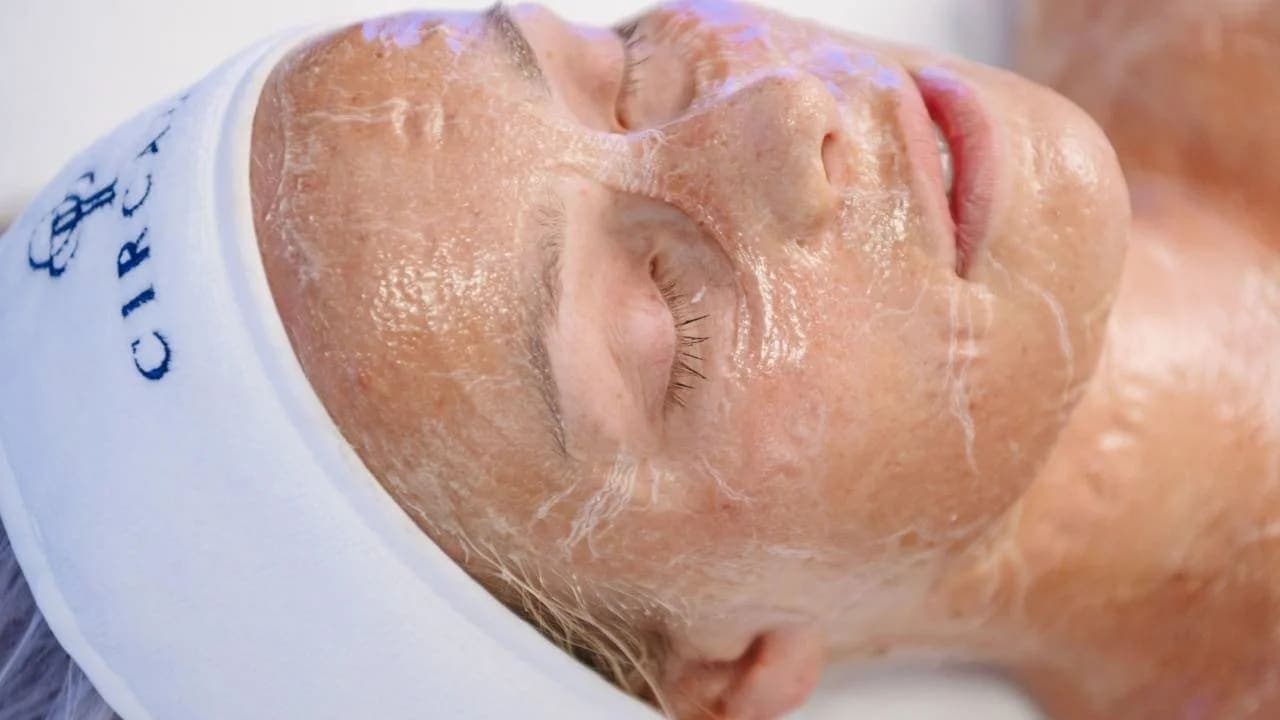
Oxygen Rx is a Circadia professional system and it appears in both of our acne-relevant facials, so it is worth explaining rather than listing. Circadia describes it as a treatment in which "a controlled amount of oxygen is generated at optimal levels on the skin", helping to "replace the ruddy look associated with acne, rosacea and telangiectasia, with brighter skin."
The mechanism it claims is specific, which we like: the bacterium involved in acne, C. acnes, is in Circadia's words "an obligate anaerobe" that "thrives in the low-oxygen environment of a clogged follicle" and "cannot survive when that environment is oxygenated." Oxygen Rx, the manufacturer says, "generates molecular oxygen directly at the follicular opening." It is professional-use only and, per Circadia, "never sold through retail channels or direct to consumers" - so this is genuinely something you cannot replicate at home.
The honest footnote on the 56% figure
Circadia states that "a published clinical trial showed a 56% reduction in inflammatory acne lesions over 6 weeks." The study it points to is Muizzuddin et al., "Enzymatically generated hydrogen peroxide reduces the number of acne lesions in acne vulgaris," Journal of Cosmetic Science 64(1), 2013 - a study of an enzymatically generated hydrogen peroxide system rather than of this product under its brand name, written by authors employed by a cosmetics company, and whose own synopsis puts it carefully: topical enzymatically generated hydrogen peroxide "may help alleviate acne." We mention the number because Circadia does. We would not hang your treatment plan on it, and we do not quote it to clients as a result you should expect.
The Home Routine That Decides Whether Any of It Holds
This section costs us money to write and we write it anyway. A facial every four weeks is about two hours of contact with your skin per month. Your own routine is roughly sixty. If those two are pulling in opposite directions, the sixty wins, and the treatment plan quietly fails while everyone blames the treatment.
The AAD publishes a list of habits that can worsen acne, and we see most of them in the consultation room. The ones that come up constantly:
- "Try a new acne treatment every week or so." The single most common pattern we meet. Nothing gets a fair trial, and the skin barrier takes the damage from all of it.
- "Apply acne medication only to your blemishes." Spot-treating what you can already see does nothing about what is forming underneath.
- "Wash your face throughout the day" and "dry out your skin." Oily skin that is stripped produces more oil, and irritated skin breaks out more, not less.
- "Scrub your skin clean." The AAD is specific about method too: "apply it with your fingertips, as scrubbing with washcloths, sponges, and other tools can irritate your skin."
- "Pop or squeeze breakouts." This is the one that turns a two-week spot into a six-month mark, and it is the reason we will not press on an inflamed lesion in the treatment room either.
The positive version is short. The AAD's own guidance is to "gently wash your face up to twice daily and after sweating," use "gentle skin care products and ones that say 'alcohol-free' on the label," choose a sunscreen that says "non-comedogenic" or "won't clog pores," keep your hands off your face because "touching your face throughout the day can cause acne to flare," and "give your treatment time to work."
An AAD line that cuts against our own menu
The same AAD page advises avoiding "astringents, toners, and exfoliants," which "can dry your skin and make acne appear worse." We sell enzyme exfoliation and chemical peels, so that deserves an answer rather than a quiet omission. The distinction we work to is frequency and control: an exfoliating treatment performed every four to six weeks by someone watching how your skin responds is a different thing from a scrub or an acid toner used daily at home. If you are having professional exfoliation, that is usually a reason to take the acids out of your home routine, not to add more - and that is the advice you will get here.
When a Dermatologist Comes First
Four situations where we would rather you booked a doctor before you booked us: deep painful nodules or cysts; scarring that is actively forming; acne that has not budged despite a genuine, consistent effort; and any acne severe enough that it is affecting how you feel about going out. None of those is a facial problem, and the AAD's position on the last of them is worth holding onto - "with a dermatologist's help, you don't need to wait for acne to clear on its own."
A licensed esthetician in Texas cannot diagnose a condition or prescribe anything, and the treatments with the best evidence for acne - retinoids, benzoyl peroxide, topical and oral antibiotics, isotretinoin and hormonal therapy - are all on the other side of that line. If you are already on any of them, tell us at the skin analysis: it does not rule out treatment here, but it changes what we do and how far we push, and where there is any doubt the call belongs to your prescriber, not to us. Esthetician vs dermatologist covers the scope-of-practice split in full.
Which Page to Read Next
This page is the map. Each route has its own page with the detail this one deliberately leaves out.
Booking Acne Treatment in Plano
If you are not sure which of the above you are, book the Acne Treatment Facial ($200, 75 min) and say at booking that acne is why you are coming. It is the safest opening move for almost every presentation, it works on congested and inflamed skin alike, and the skin analysis at the start of it is what decides everything after. If the right answer that day is a dermatologist, that is what you will hear, and we will say it before the treatment rather than after.
Treatments are performed by founder and licensed esthetician Leila Razipoor, with clinical protocols overseen by our Medical Director, Dr. Brady Steineck, MD. Our clients have rated the studio 5.0 stars across 68 Google reviews. Browse the full treatment menu, check prices, or get in touch.
Frequently Asked Questions
Keep exploring